Why It Just Became Much Easier To Buy a Home

Why It Just Became Much Easier To Buy a Home

Since the pandemic began, Americans have reevaluated the meaning of the word home. That’s led some renters to realize the many benefits of homeownership, including the feelings of security and stability and the financial benefits that come with rising home equity. At the same time, many current homeowners have decided their house no longer meets their needs, so they moved into homes with more space inside and out, including a home office for remote work.

However, not every purchaser has been able to fulfill their desire for a new home. Here are two obstacles some homebuyers are facing:

  • The ability to save for a down payment
  • The ability to qualify for a mortgage at the current lending standards

This past week, both of those challenges have been mitigated to some degree for many purchasers. The FHFA (which handles mortgages by Freddie MacFannie Mae, and the Federal Housing Administration) is raising its loan limit for prospective purchasers in 2022. The term used to describe the maximum loan amount they will entertain is the Conforming Loan Limit.

What Is the Difference Between a Conforming Loan and a Non-Conforming Loan?

Investopedia explains the difference in a recent post:

“Conforming loans are the only loans that meet the requirements to be acquired by Fannie Mae and Freddie Mac. Jumbo loans, which exceed the conforming limit, are the most common type of nonconforming loan.”

What Difference Does It Make to Me as a Home Buyer?

Forbes article earlier this year explains the benefits of a conforming loan and why they exist:

“Since lenders can’t sell non-conforming loans to Fannie Mae or Freddie Mac to free up their cash, they’re a bit riskier for the lender. This is especially true for jumbo loans, which aren’t backed by any government guarantees. If you default on a jumbo loan, it’s a huge blow to the lender.

Thus, lenders generally charge higher interest rates to compensate, and they can have even more requirements. For example, lenders who give out jumbo loans often require that you make a down payment of at least 20% and show that you have at least six months’ worth of cash in reserve, if not more.”

What Happened Last Week?

The FHFA has significantly increased its Conforming Loan Limits for 2022. Sandra L. Thompson, FHFA Acting Director, explains in the press release that:

“Compared to previous years, the 2022 Conforming Loan Limits represent a significant increase due to the historic house price appreciation over the last year. While 95 percent of U.S. countie​s will be subject to the new baseline limit of $647,200, approximately 100 counties will have conforming loan limits approaching $1 million.”

This means that more homes now qualify for a conforming loan with lower down payment requirements and easier lending standards – the two challenges holding many buyers back over the last year.

The Federal Housing Administration (FHA) also increased its Conforming Loan Limits for 2022. That could also mean an easier path to homeownership for many prospective buyers. As the Forbes article explains:

“FHA loans can be very beneficial if you don’t have as much savings, or if your credit score could use some work.”

Bottom Line

Buying your first or your next home may have just gotten much easier (less stringent qualifying standards) and less expensive (possibly lower mortgage rate). Let’s connect to discuss how these changes may impact you.
Resources:
  1. To get more information on the new FHFA Conforming Loan Limits, click here.
  2. To get more information on the new FHA Conforming Loan Limits, click here.

Don’t Wait for a Lower Mortgage Rate – It Could Cost You

Don’t Wait for a Lower Mortgage Rate – It Could Cost You

Today’s housing market is truly one for the record books. Over the past year, we’ve seen the lowest mortgage rates in history. And while those rates seemed to bottom out in January of this year, the golden window of opportunity for buyers isn’t over just yet. If you’re one of the buyers who worry they’ve missed out, rest assured today’s mortgage rates are still worth taking advantage of.

Even today, our mortgage rates are below what they’ve been in recent decades. So, while you may not be able to lock in the rate your friend got recently, you’re still in a great position to secure a rate well below what your parents and even grandparents got in years past. The key will be acting sooner rather than later.

Don’t Wait for a Lower Mortgage Rate – It Could Cost You | MyKCM

In late September, mortgage rates ticked above 3% for the first time in months. And according to experts throughout the industry, mortgage rates are projected to continue rising in the months ahead. Here’s where experts say rates are headed:While a projected half percentage point increase may not seem substantial, it does have an impact when you’re buying a home. When rates rise even slightly, it affects how much you’ll pay month-to-month on your home loan. The chart below shows how it works:In this example, if rates rise to 3.55%, you’ll pay an extra $100 each month on your monthly mortgage payment if you purchase a home around this time next year. That extra money can really add up over the life of a 15 or 30-year loan.

Clearly, today’s mortgage rates are worth taking advantage of before they climb further. The rates we’re seeing right now give you a unique opportunity to afford more home for your money while keeping your monthly payment down.

Bottom Line

Waiting for a lower mortgage rate could cost you. Experts project rates will continue to rise in the months ahead. Let’s connect so you can seize this opportunity before they increase further.

Waiting it out? Think again!

Two Reasons Why Waiting a Year To Buy Could Cost You

Two Reasons Why Waiting a Year To Buy Could Cost You | MyKCM

If you’re a renter with a desire to become a homeowner, or a homeowner who’s decided your current house no longer fits your needs, you may be hoping that waiting a year might mean better market conditions to purchase a home.

To determine if you should buy now or wait, you need to ask yourself two simple questions:

  1. What will home prices be like in 2022?
  2. Where will mortgage rates be by the end of 2022?

Let’s shed some light on the answers to both of these questions.

What will home prices be like in 2022?

Three major housing industry entities project continued home price appreciation for 2022. Here are their forecasts:

Using the average of the three projections (6.27%), a home that sells for $350,000 today would be valued at $371,945 by the end of next year. That means, if you delay, it could cost you more. As a prospective buyer, you could pay an additional $21,945 if you wait.

Where will mortgage rates be by the end of 2022?

Today, the 30-year fixed mortgage rate is hovering near historic lows. However, most experts believe rates will rise as the economy continues to recover. Here are the forecasts for the fourth quarter of 2022 by the three major entities mentioned above:

That averages out to 3.7% if you include all three forecasts, and it’s nearly a full percentage point higher than today’s rates. Any increase in mortgage rates will increase your cost.

What does it mean for you if both home values and mortgage rates rise?

You’ll pay more in mortgage payments each month if both variables increase. Let’s assume you purchase a $350,000 home this year with a 30-year fixed-rate loan at 2.86% after making a 10% down payment. According to the mortgage calculator from Smart Asset, your monthly mortgage payment (including principal and interest payments, and estimated home insurance, taxes in your area, and other fees) would be approximately $1,899.

Two Reasons Why Waiting a Year To Buy Could Cost You | MyKCM

That same home could cost $371,945 by the end of 2022, and the mortgage rate could be 3.7% (based on the industry forecasts mentioned above). Your monthly mortgage payment, after putting down 10%, would increase to $2,166.

The difference in your monthly mortgage payment would be $267. That’s $3,204 more per year and $96,120 over the life of the loan.

If you consider that purchasing now will also let you take advantage of the equity you’ll build up over the next calendar year, which is approximately $22,000 for a house with a similar value, then the total net worth increase you could gain from buying this year is over $118,000.

Bottom Line

When asking if you should buy a home, you probably think of the non-financial benefits of owning a home as a driving motivator. When asking when to buy, the financial benefits make it clear that doing so now is much more advantageous than waiting until next year.

Reasons You Should Consider Selling This Fall

Reasons You Should Consider Selling This Fall | MyKCM

If you’re trying to decide when to sell your house, there may not be a better time to list than right now. The ultimate sellers’ market we’re in today won’t last forever. If you’re thinking of making a move, here are four reasons to put your house up for sale sooner rather than later.

1. Your House Will Likely Sell Quickly

According to the Realtors Confidence Index released by the National Association of Realtors (NAR), homes continue to sell quickly – on average, they’re selling in just 17 days. As a seller, that’s great news for you.

Average days on market is a strong indicator of buyer demand. And if homes are selling quickly, buyers have to be more decisive and act fast to submit their offer before other buyers swoop in.

2. Buyers Are Willing To Compete for Your House

Reasons You Should Consider Selling This Fall | MyKCM

In addition to selling quickly, homes are receiving multiple offers. That same survey shows sellers are seeing an average of 4.5 offers, and they’re competitive ones. The graph below shows how the average number of offers right now compares to previous years:Buyers today know bidding wars are a likely outcome, and they’re coming prepared with their best offer in hand. Receiving several offers on your house means you can select the one that makes the most sense for your situation and financial well-being.

3. When Supply Is Low, Your House Is in the Spotlight

Reasons You Should Consider Selling This Fall | MyKCM

One of the most significant challenges for motivated buyers is the current inventory of homes for sale. Though it’s improving, it remains at near-record lows. The chartbelow shows how today’s low inventory stacks up against recent years. The lighter the blue is in the chart, the lower the housing supply.If you’re looking to take advantage of buyer demand and get the most attention for your house, selling now before more listings come to the market might be your best option.

4. If You’re Thinking of Moving Up, Now May Be the Time

If your current home no longer meets your needs, it may be the perfect time to make a move. Today, homeowners are gaining a significant amount of wealth through growing equity. You can leverage that equity, plus current low mortgage rates, to power your move now. But these near-historic low rates won’t last forever.

Experts forecast interest rates will rise. In their forecast, Freddie Mac says:

“While we forecast rates to increase gradually later in the year, we don’t expect to see a rapid increase. At the end of the year, we forecast 30-year rates will be around 3.4%, rising to 3.8% by the fourth quarter of 2022.”

When rates rise, even modestly, it’ll impact your monthly payment and by extension your purchasing power.

Bottom Line

Don’t delay. The combination of housing supply challenges, low mortgage rates, and extremely motivated buyers gives sellers a unique opportunity this season. If you’re thinking about making a move, let’s chat about why it makes sense to list your house now.

The Best Use of Time (and Money) When It Comes to Renovations

The Best Use of Time (and Money) When It Comes to Renovations | MyKCM

In the current sellers’ market, many homeowners wonder what, if anything, needs to be remodeled before they list their house. That’s where a trusted real estate professional comes in. They can help you think through today’s market conditions and how they impact what you should – and shouldn’t – renovate before selling.

Here are some considerations a professional will guide you through:

1. With current supply challenges, buyers may be willing to take on projects of their own. 

A more balanced market typically sees a 6-month supply of homes for sale. Above that, and we’re in a buyers’ market. Below that, and we’re in a sellers’ market. According to a recent report by the National Association of Realtors (NAR), our current supply of homes for sale, while rising, still remains solidly in sellers’ market territory:

Unsold inventory sits at a 2.6-month supply at the current sales pace, modestly up from May’s 2.5-month supply but down from 3.9 months in June 2020.”

So, what’s that mean for you? If you’re a seller trying to decide whether or not to renovate, this is especially important because it’s indicative of buyer behavior. When there aren’t enough homes for sale, buyers may be more willing to purchase a home that doesn’t meet all their needs and renovate it themselves later. 

2. Not all renovation projects are equal.

You don’t want to spend time and money on a project that isn’t worth the cost or is too niche design-wise for some homebuyers. According to an article by Renofi.com, basing home updates on what’s trendy right now can be a costly mistake:

The last thing you as a homeowner want to do is center your home design around a passing fad – even worse, one thats design quality won’t last a good while.”

Before making any decisions, let’s have a consultation. I have insight into what other sellers are doing before listing their homes and how buyers are reacting to those upgrades. Don’t spend the time and money to be trendy – if your buyer wants to upgrade to the newest fad later, they can.

3. If you’ve already made upgrades this past year, I can help spotlight them.

If you have already completed some renovations on your house, you’re not alone. The pandemic kept people at home last year, and during that time, many homeowners completed some home improvement projects. HomeAdvisor’s 2021 State of Home Spending Report found:

“35% of households that completed an improvement project undertook some type of interior painting, while 31% completed a bathroom remodel and 26% installed new flooring.”

Let your me know if you fall in this category. I can highlight any recent upgrades you’ve made in your house’s listing.

If the thought of managing renovations is overwhelming, you must check out our Concierge program! Concierge can help YOU with everything from decluttering to roof repairs to total remodels. They will plan and manage the work for you and if you have enough equity in your home, you could be eligible to pay for the work AT CLOSING. That means no cash up front. Let’s talk about it.

Bottom Line

When it comes to renovations, your return-on-investment should be top of mind. Let’s connect today to talk through any upgrades you’ve already made and to find out what you should prioritize before you sell to maximize your house’s potential.

Key Questions To Ask Yourself Before Buying a Home

Key Questions To Ask Yourself Before Buying a Home | MyKCM

Sometimes it can feel like everyone has advice when it comes to buying a home. While your friends and loved ones may have your best interests in mind, they may also be missing crucial information about today’s housing market that you need to make your best decision.

Before you decide whether you’re ready to buy a home, you should know how to answer these three questions.

1. What’s Going on with Home Prices?

Home prices are one factor that directly impacts how much it will cost to buy a home and how much you stand to gain as a homeowner when prices appreciate.

Key Questions To Ask Yourself Before Buying a Home | MyKCM

The graph below shows just how much experts are forecasting prices to rise this year:Continued price appreciation is great news for existing homeowners but can pose a significant challenge if you wait to buyUsing these forecasts, you can determine just how much waiting could cost you. If prices increase based on the average of all forecasts (12.46%), a median-priced home that cost $350,000 in January of 2021 will cost an additional $43,610 by the end of the year. What does this mean for you? Put simply, with home prices increasing, the longer you wait, the more it could cost you. 

2. Are Today’s Low Mortgage Rates Going To Last?

Key Questions To Ask Yourself Before Buying a Home | MyKCM

Another significant factor that should inform your decision is mortgage interest rates. Today’s average rates remain close to record-lows. Much like prices, though, experts forecast rates will rise over the coming months, as the chart below shows:Your monthly mortgage payment can be significantly impacted by even the slightest increase in mortgage rates, which makes the overall cost of the home greater over time when you wait.

3. Why Is Homeownership Important to You?

The final question is a personal one. Before deciding, you’ll need to understand your motivation to buy a home and why homeownership is an important goal for you. The financial benefits of owning a home are often easier to account for than the many emotional ones.

The 2021 National Homeownership Market Survey shows that six of the nine reasons Americans value homeownership are because of how it impacts them on a personal, aspirational level. The survey says homeownership provides:

  • Stability
  • Safety
  • A Sense of Accomplishment
  • A Life Milestone
  • A Stake in the Community
  • Personal Pride
Key Questions To Ask Yourself Before Buying a Home | MyKCM

The National Housing & Financial Capability Survey from NeighborWorks America also highlights the emotional benefits of homeownership:Clearly, there’s a value to homeownership beyond the many great financial opportunities it provides. It gives homeowners a sense of pride, safety, security, and accomplishment – which impacts their lives and how they feel daily.

Bottom Line

Homeownership is life-changing, and buying a home can positively impact you in so many ways. With any decision this big, it helps to have a trusted advisor by your side each step of the way. If you’re ready to begin your journey toward homeownership, let’s connect to discuss your options and begin your journey.

3 Hot Topics in the Housing Market Right Now

3 Hot Topics in the Housing Market Right Now | MyKCM

If you’re a prospective buyer or seller, it’s important to understand the current real estate market conditions and how they affect you. The Counselors of Real Estate (CRE)just released its Top Ten Issues Affecting Real Estate report. Here are three hot topics from the list and how they impact today’s housing market.

Technology Acceleration and Innovation

The past year ushered in many changes to the real estate industry, especially when it comes to technology. The CRE report elaborates on this:

“Lockdown-driven changes in our work, in the economy, in social structures, and in our personal behavior have pushed our reluctance aside. The acceleration and adoption of technology during the pandemic has impacted everything, and real estate is no exception.

For real estate, innovations like digital documentation, virtual tours, and video chat enable agents to connect with clients no matter their location. These options are ideal for prospective buyers and sellers who aren’t local to the area or those that need the added flexibility signing documents online or doing virtual tours provide. That’s why many trusted real estate advisors will continue to use these technologies moving forward to best serve their clients.

Remote Work and Mobility

Working from home became the reality for many individuals during the pandemic, and the latest list from the CRE identified remote work and mobility as an important influence on the real estate market. As the report notes:

the pandemic universally caused a movement away from urban cores, particularly for those with higher incomes who could afford to move and for lower-income individuals seeking lower costs of living. Most of these relocations remained within their original region—84%—and, while some are returning, it is unknown as to the permanence of these movements or whether they represent a true urban exodus.

With the added mobility remote work offers, where people are moving and where they can ultimately purchase a home is less dependent on a physical office location. This newfound flexibility is giving remote workers the opportunity to move to more affordable areas and buy more home for their money.

Housing Supply and Affordability

Finally, the limited supply of houses for sale and the related affordability challenges also makes CRE’s list of key factors this year:

“According to the National Association of Realtors®, the state of America’s housing inventory is dire, with a chronic shortage of affordable and available homes needed to support the nation’s population.”

There is good news. Homes are still more affordable than they have been historically thanks to today’s low mortgage rates. And while housing supply is still low, we’re seeing steady increases in the number of homes coming to market, which gives hope to homebuyers. As the supply of homes for sale improves, buyers will have more options.

Bottom Line

New technology, remote work, housing supply, and home affordability are key factors in the housing market right now for both buyers and sellers. If you want to better understand how these topics can impact you, let’s connect today.

Low Interest Rates Mean Buyers Can Win, Even in This Seller’s Market

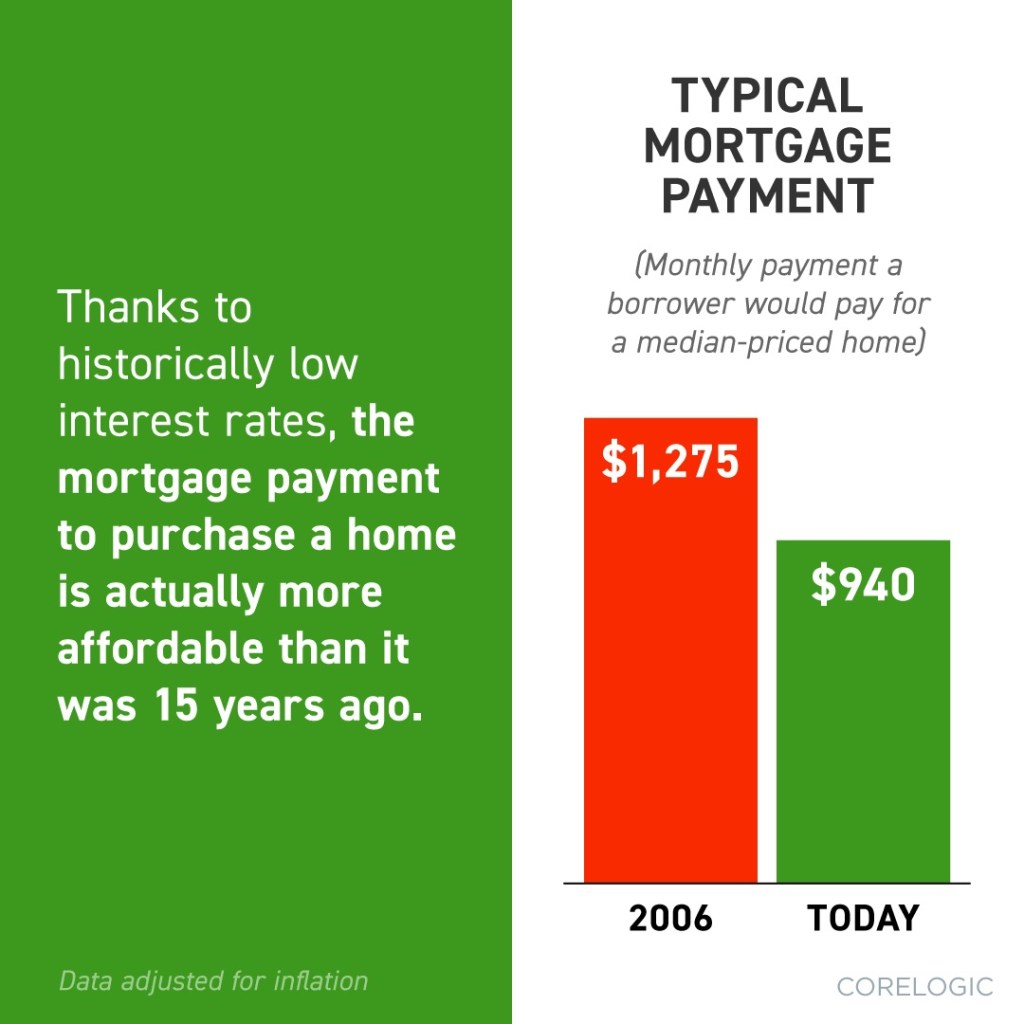
Affordability is top of mind for homebuyers. The good news is, it’s actually more affordable to purchase a home now than it was 15 years ago. When adjusting for inflation, the typical mortgage payment today is 26% lower than the median payment in 2006. DM me today so we can talk through the full affordability picture.

Are We in a Housing Bubble?

3 Charts That Show This Isn’t a Housing Bubble | MyKCM

With home prices continuing to deliver double-digit increases, some are concerned we’re in a housing bubble like the one in 2006. However, a closer look at the market data indicates this is nothing like 2006 for three major reasons.

1. The housing market isn’t driven by risky mortgage loans.

3 Charts That Show This Isn’t a Housing Bubble | MyKCM

Back in 2006, nearly everyone could qualify for a loan. The Mortgage Credit Availability Index (MCAI) from the Mortgage Bankers’ Association is an indicator of the availability of mortgage money. The higher the index, the easier it is to obtain a mortgage. The MCAI more than doubled from 2004 (378) to 2006 (869). Today, the index stands at 130. As an example of the difference between today and 2006, let’s look at the volume of mortgages that originated when a buyer had less than a 620 credit score.Dr. Frank Nothaft, Chief Economist for CoreLogic, reiterates this point:

“There are marked differences in today’s run up in prices compared to 2005, which was a bubble fueled by risky loans and lenient underwriting. Today, loans with high-risk features are absent and mortgage underwriting is prudent.”

2. Homeowners aren’t using their homes as ATMs this time.

During the housing bubble, as prices skyrocketed, people were refinancing their homes and pulling out large sums of cash. As prices began to fall, that caused many to spiral into a negative equity situation (where their mortgage was higher than the value of the house).

Today, homeowners are letting their equity build. Tappable equity is the amount available for homeowners to access before hitting a maximum 80% combined loan-to-value ratio (thus still leaving them with at least 20% equity). In 2006, that number was $4.6 billion. Today, that number stands at over $8 billion.

3 Charts That Show This Isn’t a Housing Bubble | MyKCM

Yet, the percentage of cash-out refinances (where the homeowner takes out at least 5% more than their original mortgage amount) is half of what it was in 2006.

3. This time, it’s simply a matter of supply and demand.

FOMO (the Fear Of Missing Out) dominated the housing market leading up to the 2006 housing bubble and drove up buyer demand. Back then, housing supply more than kept up as many homeowners put their houses on the market, as evidenced by the over seven months’ supply of existing housing inventory available for sale in 2006. Today, that number is barely two months.

Builders also overbuilt during the bubble but pulled back significantly over the next decade. Sam Khater, VP and Chief Economist, Economic & Housing Research at Freddie Macexplains that pullback is the major factor in the lack of available inventory today:

“The main driver of the housing shortfall has been the long-term decline in the construction of single-family homes.”

3 Charts That Show This Isn’t a Housing Bubble | MyKCM

Here’s a chart that quantifies Khater’s remarks:Today, there are simply not enough homes to keep up with current demand.

Bottom Line

This market is nothing like the run-up to 2006. Bill McBride, the author of the prestigious Calculated Risk blog, predicted the last housing bubble and crash. This is what he has to say about today’s housing market:

“It’s not clear at all to me that things are going to slow down significantly in the near future. In 2005, I had a strong sense that the hot market would turn and that, when it turned, things would get very ugly. Today, I don’t have that sense at all, because all of the fundamentals are there. Demand will be high for a while because Millennials need houses. Prices will keep rising for a while because inventory is so low.”